
Framing Done Right Before Boards Go Down
Composite Decks in Frankford for properties where footing and framing quality determine how the finished surface holds over years of use
A composite deck's long-term performance is determined mostly by what happens below the boards, not the boards themselves. Diamond Crest Builders installs composite decks in Frankford and across Sussex County, Delaware, with a framing approach shaped by owner and operator background in heavy timber construction — a background that directly affects how the structure underneath is built before composite boards are ever laid. That foundation-first sequence is what separates a deck that stays tight and level from one that begins showing problems within a few years.
The installation sequence starts with footings and framing, which are inspected and rebuilt where needed before composite boards are positioned. Boards are installed with hidden fastener systems throughout, producing a walking surface with no exposed hardware and tight, finished seams at every corner and edge. This isn't a cosmetic choice — hidden fasteners also reduce the board movement that causes surface-level problems when decks cycle through seasons of use.
Request a free on-site estimate so the framing and footing conditions at your property can be assessed directly before the project scope is finalized.
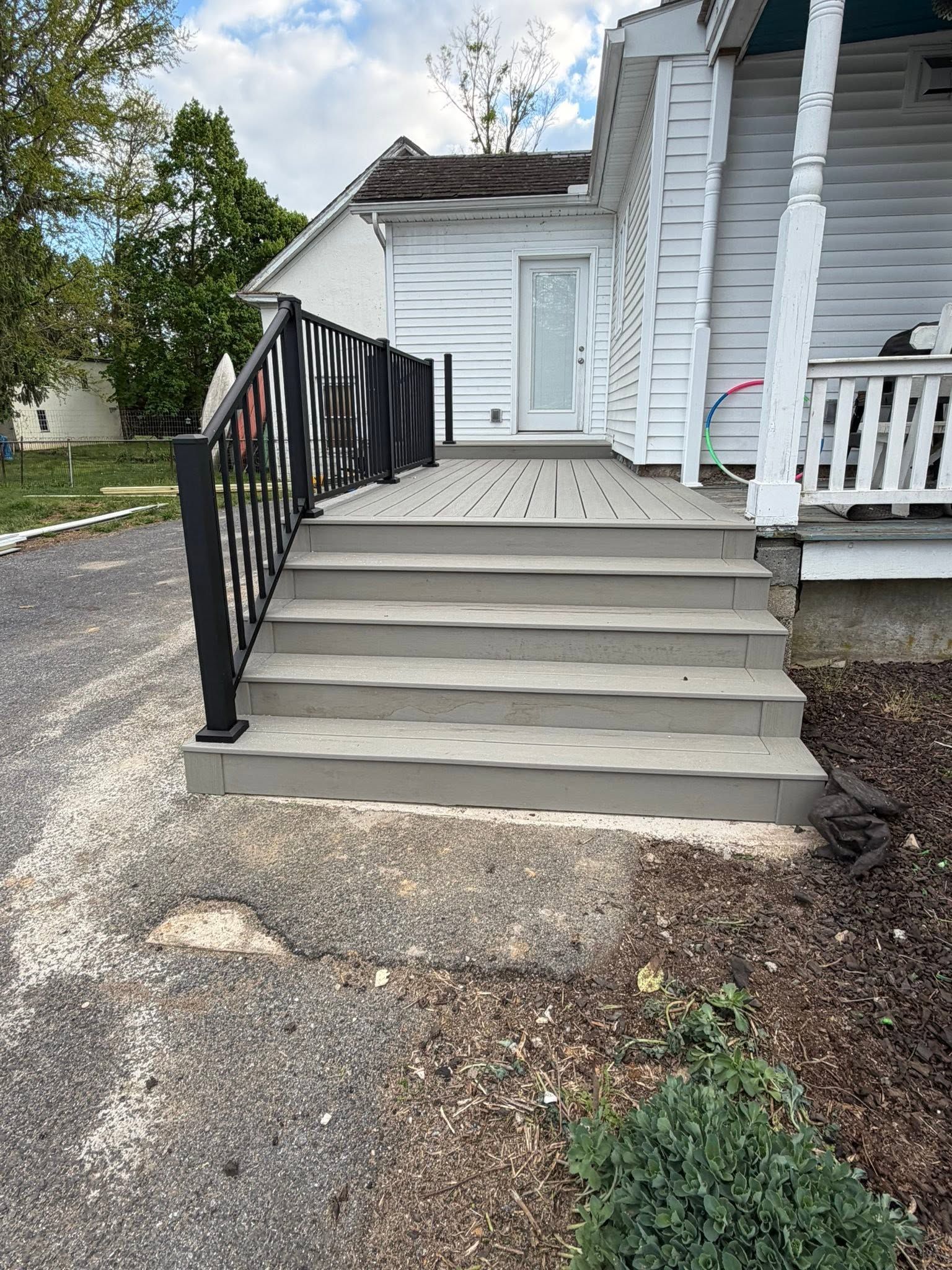
What Proper Composite Deck Installation Requires
Composite board manufacturers publish specific framing span requirements — the maximum distance between joists that the board can span without deflecting under load. These specs differ by board thickness and profile, and ignoring them is the most common reason composite decks develop flex or bounce underfoot within the first few years. Diamond Crest Builders frames to manufacturer specifications for the specific composite product being installed, which means the joist layout is confirmed before boards go down rather than adjusted after problems appear.
After the deck is complete, what you'll notice is a surface that feels solid and consistent underfoot, with corners that meet cleanly and seams that run tight rather than gapping. The hidden fastener system keeps the face of every board unbroken by hardware, so the finished appearance holds the same way at the edges and corners as it does across the main field of the deck.
The framing inspection that happens before boards go down also identifies whether existing post bases, beam connections, or ledger attachments meet current standards — a step that matters particularly on properties in Rehoboth Beach and Bethany Beach where older decks were sometimes built to looser framing tolerances. Diamond Crest Builders is owner-operated and insured, so the same person making structural decisions on-site is accountable for the finished result.
Answers About How Composite Deck Work Is Done
The following questions address the sequence, materials, and decision points involved in a composite deck installation, with a focus on what actually determines how the finished deck performs.
How does the framing inspection affect what gets built?
The inspection determines whether existing framing can carry the composite product being installed or whether joists, beams, or connections need to be rebuilt to meet the span requirements for that specific board — a decision that has to be made before boards are ordered in final quantity.
Why do hidden fasteners matter for composite decking specifically?
Composite boards expand and contract differently than wood, and hidden fasteners allow controlled movement at each board without loosening over time, whereas surface screws can work free or cause the board face to dimple as movement occurs.
What does a finished corner look like on a properly installed composite deck?
Corners are mitered or capped tight with no open gaps at the joint — a visible gap at a corner edge is typically a sign that boards were cut to length without accounting for the finish trim sequence.
How do poured concrete pier footings differ from other footing types used in Sussex County?
Poured concrete piers extend below grade to a depth suited to the load and site conditions, providing a stable base that doesn't shift the way surface-mounted post hardware can over time on properties that see extended vacancy between uses.
When does framing need to be rebuilt rather than just inspected?
Framing is rebuilt when span distances don't meet the manufacturer's requirements for the composite product selected, when connections show deterioration, or when the original framing layout doesn't support the planned board direction or pattern.
Diamond Crest Builders also installs composite decks in Lewes, Millsboro, Rehoboth Beach, Bethany Beach, and Salisbury. To discuss your project and arrange a site visit, contact Diamond Crest Builders directly — the estimate is free and done in person so the actual framing and footing conditions are part of the conversation from the start.