
Structural Deck Problems Found Before They Spread
Deck framing and joist repair in Frankford for older decks where rot at ledger and beam connections has reached the hidden structure
A deck surface that has begun to flex underfoot or show soft spots at the boards often signals that the problem is not in the surface at all—it is in the joists, beam connections, or ledger below. Diamond Crest Builders repairs deck framing and joists for homeowners in Frankford, working on the structure that sits beneath the boards rather than addressing only what is visible from above. Many decks built on older farm-town frame houses in this part of Sussex County were framed decades ago with lumber that has since degraded at the very joints that carry the load: the ledger where the deck meets the house, and the beam-to-post connections that hold the outer edge.
The repair sequence begins by opening the deck to expose the framing rather than working blind. Joists, beams, ledger attachment points, and post connections are all inspected once the surface boards are lifted. Only the members that are actually damaged are replaced, and the findings are shown to the homeowner before any framing work proceeds—so there are no discoveries that appear on a bill without a prior conversation. Corrected connections are fastened to current standards before any surface boards are reinstalled.
Request a framing inspection from Diamond Crest Builders to identify which structural members are affected before committing to a repair scope.
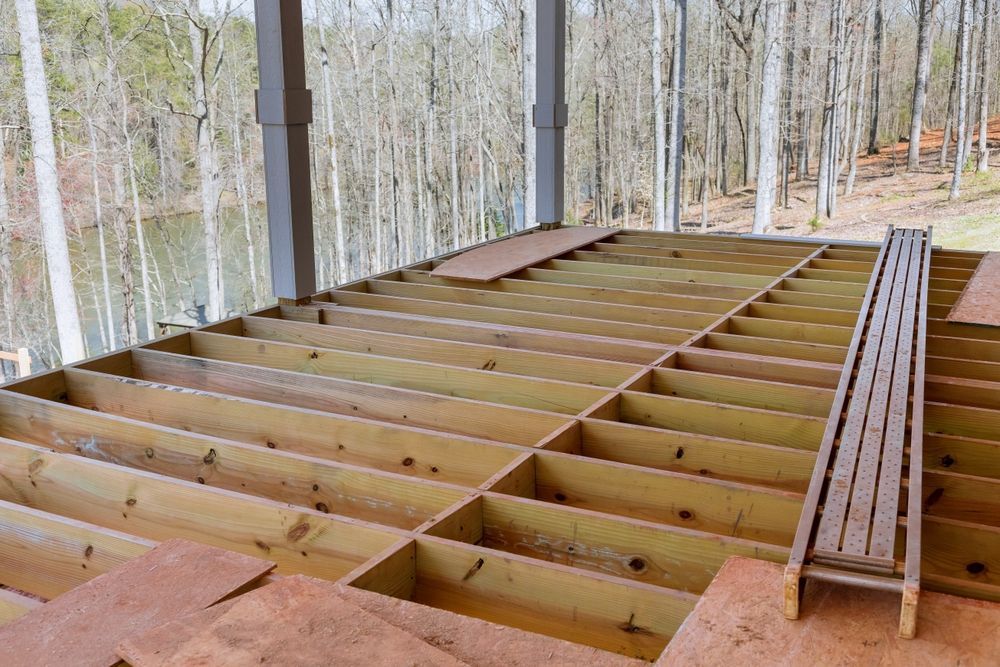
How Deck Framing Repair Addresses the Structure Beneath
Ledger failures are among the most consequential framing problems on residential decks because the ledger carries the load of the entire deck structure at the point where it connects to the house. On frame houses where the ledger was bolted through siding rather than integrated with the rim joist and flashed correctly, moisture has typically been working at that connection for years by the time the surface shows movement. Joist hangers and beam seats at mid-span and outer posts are the next areas where degradation appears, particularly when the original hardware was not rated for exterior exposure or was installed without a galvanized fastener specification.
After the framing repair is complete, the deck surface that goes back down sits on a structure that carries load as it was designed to. The flex that was noticeable when walking across the deck is gone because the joist that was allowing it has been replaced and the connection that was letting it move has been corrected. What changes is not just what is visible from below but what the deck feels like under normal use.
Framing repair is scoped to the structural members found to be damaged during the inspection. If the surface boards are in serviceable condition and were removed carefully, they may go back down as part of the same job. If the inspection reveals that the footings or post bases are also compromised, those findings are reported and addressed as a separate decision before framing work above them is completed.
Common Questions About How the Work Is Done
These questions address how deck framing repair is scoped and sequenced, what the inspection covers, and how to recognize when the structural issues have been corrected properly.
How does the crew determine which joists need to be replaced rather than sister-reinforced?
Members that have lost structural integrity at the connections or through the cross-section are replaced, while joists that retain sound material through their depth but show surface checking or discoloration may be assessed for sistering depending on the extent of the damage.
What makes ledger failure particularly difficult to detect before the deck is opened?
The ledger sits between the siding and the surface boards, so deterioration at the bolted connection is hidden on both faces until the surface is lifted or the connection begins to pull away from the house framing.
Why are fastener specifications important when correcting beam and joist connections?
Hardware and fasteners that are not rated for exterior exposure begin to corrode at the connection point and can fail at a fraction of their rated load over time, so replacement connections use hot-dipped galvanized or stainless hardware appropriate for an outdoor structural assembly in Frankford's coastal proximity environment.
When is a full re-framing more appropriate than targeted joist and beam repair?
When damage has progressed through multiple adjacent members and the ledger connection itself has separated or compromised the rim joist behind it, replacing the full framing assembly is more reliable than attempting to restore individual members in a deteriorated field.
What does a correctly completed framing repair feel like and look like when you walk the deck?
The surface should be stable under foot traffic without deflection between joists, fasteners at the ledger and beam connections should be visible and fully driven, and there should be no movement at the post bases when lateral pressure is applied at the deck perimeter.
Diamond Crest Builders also repairs deck framing and joists in Lewes, Millsboro, Rehoboth Beach, Bethany Beach, and Salisbury. To have the framing beneath your deck inspected and the condition of each structural member documented before any repair scope is agreed upon, call Diamond Crest Builders at (302) 681-4682.