
New Walking Surface, Existing Structure Retained
Deck resurfacing and re-decking in Millsboro for second homes and investment properties where the framing is sound but the surface boards have reached end of life
Many decks near the water in Sussex County were built ten or more years ago with framing that remains structurally sound and footings that have not moved, but surface boards that have checked, cupped, or splintered to the point where the walking surface is no longer functional. Re-decking that structure rather than replacing it is the direct route to a usable deck without the cost of rebuilding framing that does not need to be rebuilt. Diamond Crest Builders resurfaces and re-decks existing structures for homeowners in Millsboro and the surrounding area, starting every project by confirming that the framing and footings underneath are actually worth building on before any new boards are ordered.
The crew removes the existing boards and all fasteners before inspecting the joist tops, beam seats, and ledger connection. Any structural issues found during that inspection are reported before new decking is installed—no new surface goes down over framing that has been found deficient. Once the structure is confirmed sound, new decking is installed using hidden fastener systems that eliminate the surface-fastener pattern and allow for expansion and contraction across the board width without the cupping that results from face screws pulling through weathered wood.
Request an on-site framing evaluation from Diamond Crest Builders to confirm whether the existing structure qualifies for re-decking before new surface material is selected.
The Difference Between Re-Decking and Full Deck Replacement
Re-decking is only the right approach when the framing that will carry the new surface is in the condition it appears to be from above. Hidden fastener systems used in the re-decking process require that joist tops are reasonably level and that the spacing between joists is consistent enough to accept the clip system at the correct intervals. On decks built in Frankford and other inland communities during the 1990s and early 2000s, the original joist spacing was often set to 16 inches on center for dimensional lumber decking, which is compatible with most current hidden fastener systems without modification. Decks with non-standard spacing may require blocking between joists to create a consistent clip attachment point before re-decking proceeds.
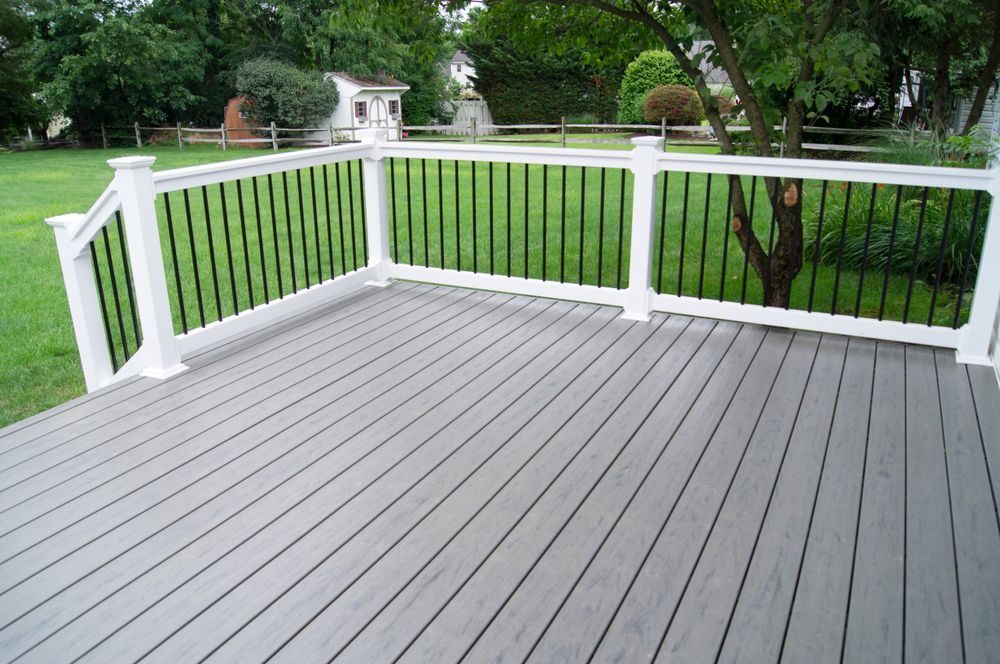
After re-decking is complete, the surface reads as a new deck: boards are uniform in color and profile, there are no visible fastener heads interrupting the surface, and the edge detail at the fascia is clean. The structure beneath remains exactly what it was, which is the intended outcome—the investment goes into the surface that is used daily rather than into framing that was already performing correctly.
Re-decking does not include railing replacement unless that work is identified separately and added to the project scope. If the framing inspection reveals joist or ledger damage that needs to be corrected before new boards can go down, that repair is reported and quoted as a separate item so the decision on how to proceed stays with the homeowner.
What Homeowners Ask About Re-Decking Work
The questions below address how re-decking is sequenced, what the framing inspection looks for, and what distinguishes a re-decking job done correctly from one that defers the real problems.
How does the crew confirm framing is sound before new decking is installed?
Joists are visually inspected at the top edge and probed at end grain and connection points, beam seats and post caps are checked for fastener integrity, and the ledger is examined at the wall connection for separation or rot before any surface material is committed.
Why are old fasteners removed rather than left in place when boards are stripped?
Old fasteners left in joist tops create an uneven bearing surface that causes the new board to rock or gap at that point, and exposed fastener shanks can work upward over time and puncture the underside of new decking installed directly over them.
What makes hidden fastener systems perform differently from face-screwed decking?
Hidden fasteners hold the board from the side rather than driving through the face, which allows the board to move slightly across its width as moisture content changes without splitting around a face fastener or cupping at the edges where the screw creates a stress concentration.
How does the age and construction era of a deck in Millsboro affect re-decking compatibility?
Decks built before pressure-treated lumber standards changed in the early 2000s may have framing that has been exposed to CCA-treated material, which affects fastener selection for the new surface since incompatible metals accelerate corrosion at the joist top where the new fastener or clip contacts the treated wood.
What should the completed re-decking look like at the board ends and fascia line?
Board ends should be cut to a consistent overhang at the perimeter, the fascia cap should sit flush against the board ends without gaps, and no fastener hardware should be visible at the walking surface once the hidden clip system is installed and boards are snapped into position.
Diamond Crest Builders also resurfaces and re-decks existing structures in Lewes, Millsboro, Rehoboth Beach, Bethany Beach, and Salisbury. To have the existing framing reviewed and the re-decking scope confirmed on site, call Diamond Crest Builders at (302) 681-4682.