
Framing Failures Hidden Under Old Boards
Deck Replacement in Frankford for decks where failed joists, rotted framing, or failing hardware have compromised the structure underneath the surface
Many decks in Sussex County beach communities were built in the late 1990s and early 2000s using framing lumber and hardware that was adequate for inland construction but not chosen with salt-air exposure in mind. The boards on top may look serviceable while the joists, post bases, and ledger connections below have corroded or softened to the point where the deck no longer meets load requirements. Diamond Crest Builders replaces decks in Frankford and across Sussex County, starting with the framing inspection rather than assuming the structure underneath is salvageable. The crew removes the old decking first, then assesses every framing member before any new material is ordered.
Replacement begins with pulling the existing decking surface to expose the joists, beams, and footings below. Any framing member that shows rot, undersizing, or corroded hardware is rebuilt rather than covered over—which is the point at which replacement differs from resurfacing. New decking is installed on poured concrete pier footings, with hidden fasteners and hardware selected for coastal exposure. For properties in communities like Bethany Beach or Lewes where HOA or architectural review applies, Diamond Crest Builders can handle the submission documentation so the project moves through that process without the homeowner managing it separately.
Request a free on-site inspection to assess the current condition of your framing and confirm whether replacement or a more limited scope applies.
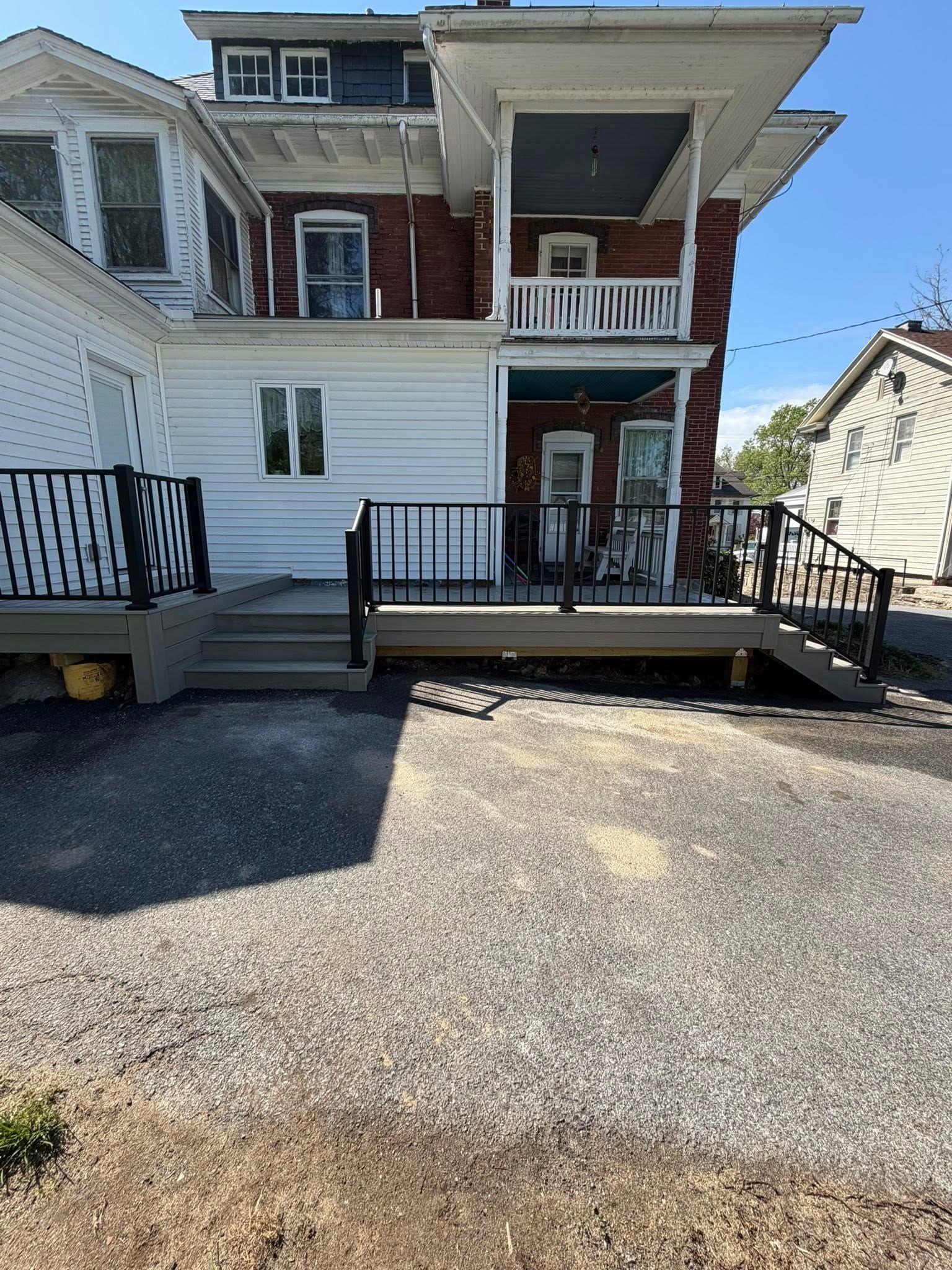
How Deck Replacement Addresses What Resurfacing Cannot
Resurfacing installs new boards on top of existing framing without verifying what the framing is doing. When the structural failure is in the joists or post connections—which is the typical pattern for second-home decks built with standard interior framing hardware in coastal Sussex County—resurfacing produces a deck that looks new from above and continues to fail from below. The full replacement sequence exists specifically to address that gap: remove the surface, inspect the frame, rebuild what does not meet current standards, then install the new surface on a corrected structure.
Once Diamond Crest Builders completes the replacement, the visible change is a new decking surface with consistent fastener spacing and clean edges. The structural change—new pier footings, corrected joists, hardware rated for coastal exposure—is not visible but is what determines whether the deck holds for another generation rather than another few seasons. Homeowners typically notice that the deck surface no longer flexes or bounces at mid-span, which is a direct indicator that the joist sizing and spacing beneath are correct.
Deck replacement scope covers removal of the old decking, framing inspection and correction, new pier footings where required, and new decking installation with appropriate fasteners. The inspection phase is what determines the full scope; a project that appears straightforward from the surface occasionally reveals undersized beams or failed ledger flashing that extends the work. That assessment happens before the price is confirmed, not after the project is underway.
Answers About How the Work Is Done
These questions address how deck replacement is sequenced and what the framing inspection phase involves, particularly for properties in Sussex County where coastal exposure and construction era affect what is found below the surface.
How do you determine whether a deck needs full replacement rather than resurfacing or restoration?
The determination happens during framing inspection after the old decking is removed. Joists that are soft, cracked, or undersized for the span, footings that have settled or cracked, and post base hardware that has corroded through are all conditions that require rebuilding rather than covering with new boards.
What does the framing inspection actually involve, and what does the crew look for?
Each joist is probed for soft spots that indicate internal rot, checked for crown or sag that affects the surface plane, and inspected at the hanger and beam connection for corrosion. The ledger-to-house connection and its flashing are also examined, since ledger failure is a common and serious finding on second-home decks in beach communities that sat unmonitored for extended periods.
Why are poured concrete pier footings used rather than adjustable post bases or surface-mounted anchors?
Poured concrete piers extend below grade to stable bearing depth, which is critical for decks on raised or pier-foundation homes where the soil profile below is not uniform. Surface-mounted hardware does not provide the lateral resistance that a poured footing does, and code requirements in coastal Delaware typically require footings set to a specified depth.
How does HOA or architectural review affect the replacement process, and when does it need to start?
Review submissions typically require drawings or material specifications before work begins, so the documentation process has to run in parallel with permitting rather than after. Diamond Crest Builders can prepare and submit that documentation for communities in Lewes and Bethany Beach, which prevents the delay that results from a homeowner submitting incomplete plans independently.
What should a completed deck replacement look like, and how can a homeowner verify the framing was done correctly?
At the surface level, fastener spacing should be consistent and no board should rock or move when stepped on at mid-span. At the framing level, joist hangers should be fully nailed with no empty holes, hardware should be rated for the exposure class, and post bases should be set in or on concrete rather than driven into soil.
Diamond Crest Builders also replaces decks in Lewes, Millsboro, Rehoboth Beach, Bethany Beach, and Salisbury. To schedule a framing inspection and on-site scope review, connect with Diamond Crest Builders directly and describe what you are seeing at the deck surface or underside.