
Worn Deck Edges That Read as Finished
Deck Restoration in Frankford for exposed undersides, worn fascia, and unfinished deck edges that age the look of the house
Exposed deck undersides and deteriorating fascia boards are a common condition on older coastal homes, where the original construction left structural edges open or finished only to a basic standard. Diamond Crest Builders restores decks by addressing exactly those two areas—replacing worn fascia and adding skirting to close off the underside—so the deck reads as a complete, integrated part of the house rather than a platform bolted onto it. Homeowners who want that finished look without a full rebuild are the primary candidates for this work.
Restoration work begins with the fascia, which frames the visible perimeter of the deck and takes the most visible wear. Once the fascia is replaced and sitting square, the crew installs skirting along the underside to close the gap between the deck frame and grade. Edges and corners are trimmed so transitions are clean rather than patched-looking. The sequence matters: skirting installed before the fascia is plumb produces visible misalignment at every corner, which is the most common shortcut in cosmetic deck work.
Schedule a free on-site estimate to review the current condition of your deck's fascia and underside framing.
What Changes After the Restoration Is Complete
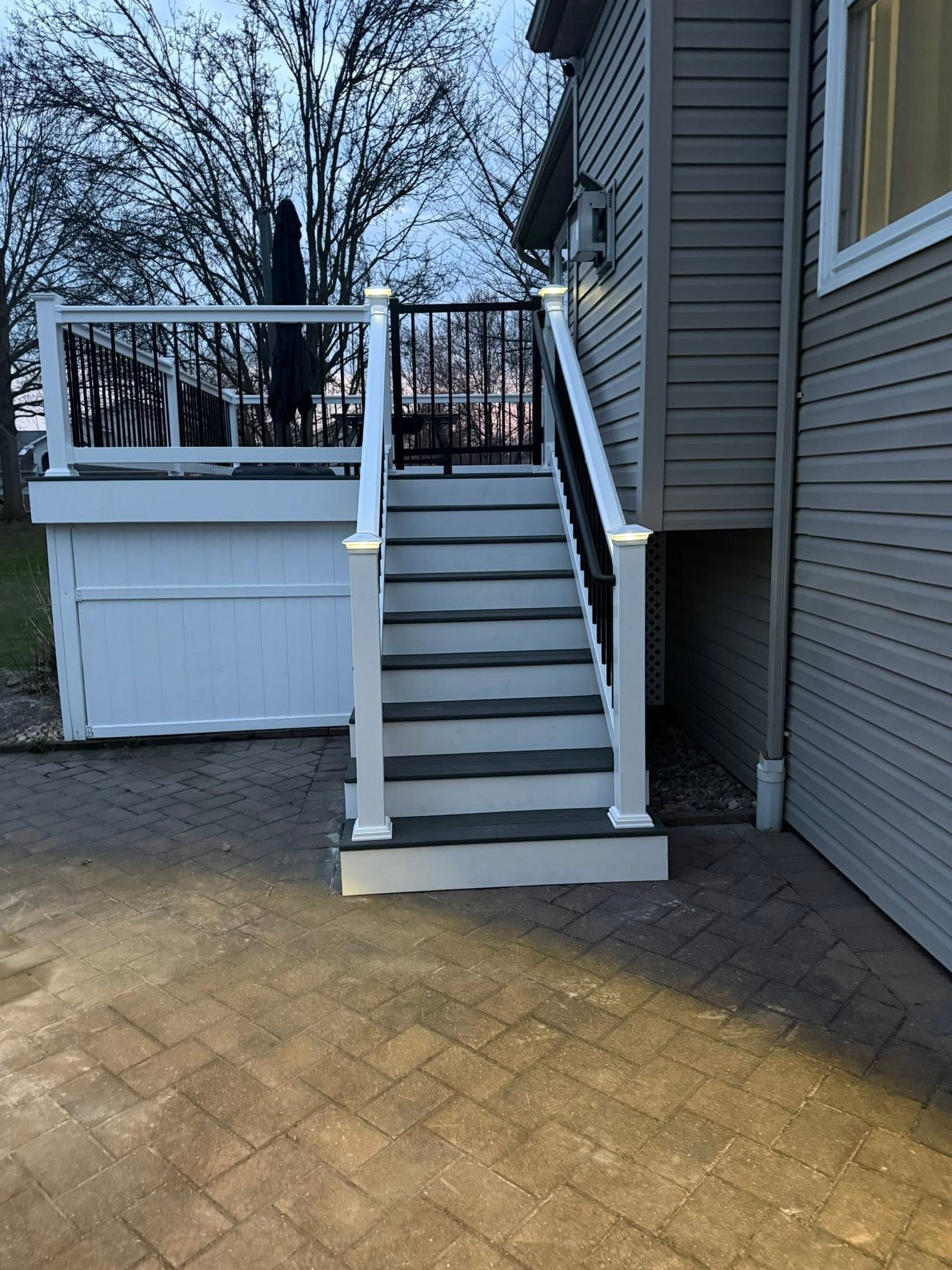
After the fascia is replaced and skirting is installed, the most immediate change is that the deck no longer shows its framing, posts, or raw pier bases from ground level. The structure looks enclosed and deliberate rather than utilitarian. This matters particularly for older properties along the Sussex County coast, where homes built before the mid-1990s typically had exposed deck framing as a standard detail, not because it was preferred but because skirting and finished fascia were treated as optional upgrades at the time.
Once Diamond Crest Builders completes the work, homeowners typically notice the change most clearly from the yard looking back at the house: the deck now sits as a finished element against the exterior rather than appearing tacked on. The underside is no longer an area that collects debris visibly, and the fascia line gives the deck a defined edge that carries the eye the same way a finished grade board does on a building foundation.
Restoration work covers the fascia and skirting as primary scope items. If the existing framing shows rot or structural softness during the inspection, that assessment happens on site before work begins so the scope is accurate and nothing is concealed behind new material.
Common Questions About Deck Restoration Work
These questions address how deck restoration is performed and what decisions get made during the process, particularly for properties where the original construction left edges open or unfinished.
What does skirting installation actually involve, and how is it attached to the deck frame?
Skirting is fastened to the rim joist and any intermediate framing that aligns with the panel layout, so the attachment points are structural rather than cosmetic. The material is cut to follow grade changes so the bottom edge stays consistent from one side of the deck to the other.
How do you determine whether the existing fascia can be replaced in kind or whether the framing behind it needs attention first?
The crew checks whether the rim joist the fascia attaches to is solid before any new material goes on. Soft or punky rim joist material has to be addressed before the fascia is set, because a fascia board screwed into deteriorated framing will not sit flat or hold long-term.
When is deck restoration the right choice rather than a full deck replacement?
Restoration applies when the framing and structural members are sound and the issue is limited to surface and edge conditions—worn fascia, open undersides, or unfinished corners. When the joists, beams, or footings show rot or movement, replacement is the more accurate scope.
What should a homeowner check to confirm the finished work is done correctly?
After skirting and fascia installation, corners should be square with no gaps at the miter joints, and the fascia face should sit flush with the decking edge above without bowing between fastener points. Any visible daylight between skirting panels and grade on a flat run indicates the material was not scribed to the ground line.
How does the construction era of a home in Frankford or the surrounding area affect what restoration involves?
Homes built in Sussex County through the 1980s and early 1990s were frequently built with deck fascia that was nominal-dimensioned and unprimed on the back face, which accelerates deterioration at fastener points. Replacement material on those decks is typically chosen for dimensional stability since the original framing spacing may not match current standard panel widths.
Diamond Crest Builders also performs deck restoration in Lewes, Millsboro, Rehoboth Beach, Bethany Beach, and Salisbury. To confirm whether your deck is a candidate for restoration or requires a different scope, request an on-site evaluation and written assessment from Diamond Crest Builders directly.