
Surface Problems Often Signal Structural Ones
Deck Repair in Frankford for decks where surface wear and board failure may indicate that the framing and footings underneath need attention first
On older coastal cottages and beach-block houses across Sussex County, a deck that looks worn at the surface is frequently hiding framing that has been quietly weakening underneath. Diamond Crest Builders repairs decks in Frankford and across Sussex County, starting every repair call with a structural inspection of the framing and footings rather than treating surface board replacement as the whole job. That inspection-first sequence is what determines whether a deck needs targeted repairs or whether the framing underneath has deteriorated to the point where surface work would only delay a more significant failure.
Repair work covers board replacement, railing upgrades, structural inspection, footing repair, and conversion from wood to composite — all within the same project scope when needed. The sequence begins with the framing and footings, and surface work is only addressed once the structural conditions are understood. Footing repair happens before the surface is finished, so the completed deck rests on a corrected base rather than a patched one. Free on-site estimates are available and conducted in person.
Arrange a structural inspection to determine what your deck's framing and footings require before surface repair work is planned.
What Deck Repair Actually Addresses Below the Surface
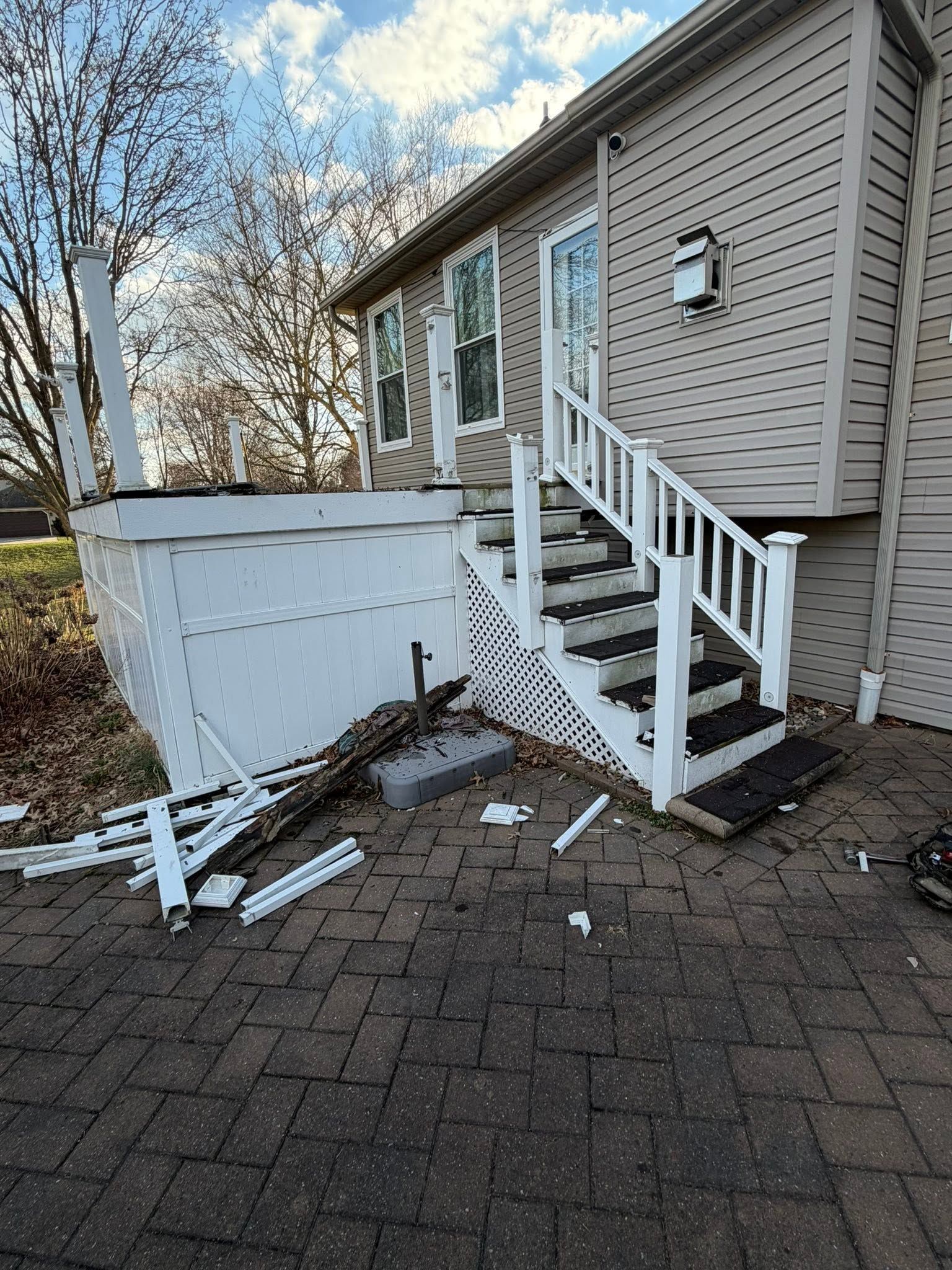
Framing deterioration on decks in Sussex County tends to concentrate at the beam-to-post connections and at the ledger where the deck attaches to the house — two locations that stay damp longer than the open deck surface above them and that were often built with hardware that doesn't hold up to extended exposure. A structural inspection identifies whether joist hangers, post bases, and ledger connections are still sound, and whether the posts themselves have deteriorated at the bottom where they contact or approach grade. These are the points that determine whether the deck is structurally sound enough to carry a repaired surface or whether framing members need to be replaced before boards go down.
After repair work is complete, what changes is specific and observable: boards that were soft or deflecting underfoot are replaced and feel solid, railings that moved under pressure are re-secured or replaced entirely, and footing issues that were causing post movement are corrected so the deck no longer shifts. Diamond Crest Builders also handles wood-to-composite conversions as part of a repair scope, so a homeowner whose wood deck has reached the end of its surface life can move to a composite surface without starting the structural work over from scratch.
The decision between repair and full replacement comes down to what the framing inspection finds: if the beam-to-post connections and ledger are sound and the posts are solid at grade, targeted repairs extend the deck's useful life significantly. If framing members have deteriorated past the point where sistering or connection repair is sufficient, replacement of those members is addressed as part of the same project rather than deferred to a separate scope.
Answers About the Deck Repair Process
The questions below address how structural inspection and repair sequencing work in practice, and what determines the scope of repair work on decks with surface and below-surface problems.
Why does the structural inspection happen before surface boards are replaced?
The framing condition determines whether new boards would be installed over a sound structure or over one that will continue to deteriorate — replacing boards without inspecting what's underneath can mean the new surface fails for the same reason the old one did.
How do you tell whether deck framing needs repair or full replacement?
Framing members are assessed for cross-section loss from deterioration: a joist or beam that has lost structural depth or that has deteriorated at a connection point past what sistering can restore needs replacement, while surface checking or minor softness at the face may not affect structural capacity.
What does a footing repair involve on an older deck in Frankford?
Footing repair typically means exposing the existing pier or post base, assessing whether it's still carrying load correctly, and either repairing the connection hardware or replacing the footing and resetting the post so the load path from the deck above is restored.
What is involved in converting a wood deck surface to composite during a repair project?
The existing wood boards are removed, the framing is inspected and corrected to meet the joist span requirements of the composite product being installed, and the composite boards are then laid with hidden fasteners — the conversion is sequenced so the structural work and the surface work happen in the correct order.
How do railing replacements fit into a deck repair scope?
Railings are assessed during the structural inspection for post base integrity and connection to the framing — a railing that moves under lateral load typically has a post base that has failed at the deck surface, which is addressed before the new railing hardware is installed.
Diamond Crest Builders also repairs decks in Lewes, Millsboro, Rehoboth Beach, Bethany Beach, and Salisbury. To have a structural inspection scheduled at your property and a repair scope developed from what's actually found underneath, call Diamond Crest Builders at (302) 681-4682.